Wednesday, October 4, 2023

Be Aware: "Shoulds" are Fear-Driven

In my previous post, I discussed aspiration-driven and fear-driven behaviors, emphasizing the importance of staying focused on your aspirations to drive personal growth and fulfillment. I hope you found this concept meaningful, as it has the potential to significantly transform your life for the better.

Additionally, some years ago, I wrote about my encouragement for you to avoid being controlled by "shoulds" in an article titled "So Many Shoulds and Shouldn'ts" (you can read it here). I want to emphasize that "shoulds" are inherently fear-driven, albeit often in a subtle form, and their influence on your life can be dramatically reduced once you gain a clearer understanding of them and refrain from overusing this expression.

Why are "shoulds" fear-driven? Because they often imply phrases like "I should do [ ] to avoid trouble" or "I shouldn't do [ ] because my father said so." These statements are rooted in fear. By revisiting my article on "shoulds," you'll come to understand that there aren't as many things in life that we genuinely "should" or "should not" do as we might think. Increasing awareness in your daily life and reevaluating or rephrasing your "shoulds" can invite more joy and aspiration into your life.

Many of us have been conditioned to live based on apparent and subtle fears (think about how many times you say "should" and "have to" in one day!), but it's essential to recognize that you have options and can overcome unnecessary fears to lead a more satisfying life. I hope you can see these possibilities and take steps to embrace a more fulfilling life.

Tuesday, September 12, 2023

Aspiration or Fear-Driven?

I encourage my clients to discern whether their actions are motivated by aspiration or fear. This perspective can be invaluable in decision-making, so I'll explore it today.

First, let me pose a question: Can you easily articulate your desires and what you want to do? Sometimes, people become so accustomed to focusing on what they don't want, what they'd rather avoid, and what they don’t mind doing. This inclination may also relate to today's topic. Therefore, if you find it challenging to express your desires, please pay close attention to this tendency as I explain it below.

When we feel compelled to take action, we can generally categorize our motivations into two types, as per my theory: Fear-Driven or Aspiration-Driven

Fear-driven behaviors often stem from a desire to evade fearful situations, such as saying, "I exercise because I'm afraid of gaining weight," "I turned down this promotion because I want to avoid extra responsibilities," or "I got married because I fear the prospect of loneliness," and so forth. Typically, when we engage in such behaviors, the fear doesn't dissipate; instead, it tends to gradually intensify. Moreover, we eventually tend to lose sight of what we genuinely aspire to achieve, which is a common tendency.

Although it may present more challenges, focusing on our aspirations and consistently pursuing them can lead to a more exciting and fulfilling life. For example, consider phrases like "I exercise because I want to feel more attractive," "I declined this promotion because I value my current work-life balance," or "I got married because I desired greater happiness with my spouse." When faced with two options, it is crucial to prioritize your aspirations over succumbing to fear. Overcoming fear by pursuing your genuine desires is a transformative process. As you become aware of this and cease nurturing your fears, your life will gradually shift, and you will discover greater enjoyment in it.

Additionally, if a situation can encompass both aspects, such as exercising to avoid gaining weight and aspiring to be more attractive, redirect your focus toward the aspiration that excites you most. In this way, you can enjoy the process more easily and happily!


Wednesday, August 23, 2023

“I’m Sorry If…”


Apologies and expressions of appreciation wield significant power within relationships. As a couples' therapist, I actively encourage couples not to withhold "I'm sorry" and "thank you" from each other. In a previous discussion, I addressed the issue with the common phrase "I'm sorry, okay?"—emphasizing its inherent risks and counterproductive nature. Today, I'd like to delve into another problematic apologetic expression: "I'm sorry if…"

Haven't you often encountered apologies that sound like, "I'm sorry if I hurt your feelings" or "I'm sorry if I offended you," and so on? Regrettably, this form of apology is deeply flawed and should generally be avoided.

What makes this apology problematic? The phrase "I'm sorry if…" essentially conveys, "I didn't intend to do anything wrong. However, IF you're overly sensitive and perceive an issue, I'll begrudgingly offer an 'apology' to silence you." This fundamentally lacks a sense of responsibility or genuine remorse on the apologizer's part, instead placing blame on the recipient for misunderstanding or oversensitivity. Consequently, rather than engendering a positive response, this type of "apology" often leaves the recipient feeling culpable.

For this reason, when seeking to apologize for mistakes or wrongdoing, it's crucial to demonstrate ownership and assume responsibility. For example: "I apologize for my actions that led to [specific situation]. I acknowledge my error and for being unfair. I deeply regret hurting you and offer my sincere apologies by saying 'I’m sorry.'" In contrast, using "I'm sorry if…" could inadvertently spark further conflicts. Remember, employing effective communication strategies like these can significantly enhance relationships!


Tuesday, July 25, 2023

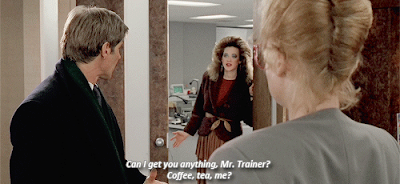
Coffee, Tea, Me?


"Working Girl" 1988
If I suggested that you stay away from coffee and other caffeinated beverages for 2 weeks, ideally 4 weeks, most people would say, "Oh, caffeine doesn't do anything to me," and they wouldn't want to do it. However, IF you experience any difficulties with sleeping, anxiety and nervousness, restlessness, acid reflux, stomachache, or lethargy and sleepiness during the day, this experiment is truly worth it for you.

If you are one of the lucky ones who experience absolutely zero problems with caffeine and can simply enjoy the joy of coffee, that's fantastic! I wish I were like that too. It's tasty, and the aroma is nice. Having some time at a nice café is just lovely. Unfortunately, in many cases, caffeine masks your exhaustion, and it compromises your proper self-care: You miss appropriate resting, which causes even more exhaustion. By the way, energy drinks can be even worse! They should only be consumed like medicine, if ever, when you have an absolute deadline or need to drive to a hospital to visit someone in critical condition at night or any other absolute situation.

There seems to be a gap between the surface-level benefits and/or impact you get from coffee and its hidden negative impact under the surface, as I listed above. Because people don't feel much of the immediate effects, such as feeling energized or staying up late with coffee, they automatically believe coffee has no significant impact on them. But that's just not true. Therefore, this experiment is very important to find out if there is any unknown problematic impact on you or not. I know the thought of having mornings without coffee is scary for you, but I still strongly recommend it (or decaf options!).

A good number of people would be surprised at how much better they sleep, how less anxious they are, and how "Wow, the acid is gone!" Just to confirm that caffeine is not secretly affecting you, let's experiment! And if it does have an influence, you can still enjoy it occasionally, and the other times appreciate decaffeinated coffee and caffeine-free teas!

Coffee, tea, me? Always remember, "Me" comes first. Your health, well-being, and peaceful life are much more important than pleasurable drinks.


Monday, July 17, 2023

Dating is All about Assessment

Some people date solely for sex or companionship, and if that's the clear purpose, it's perfectly fine. However, for many young adults, especially those seeking a spouse, dating is about finding a life partner. If you're dating or looking to date with this goal in mind, it's crucial not to get distracted and lose sight of this fundamental objective. In this context, dating is all about assessing whether your date is suitable as a life partner or not.

You need to have a clear idea of the type of person who would be compatible with you and the qualities that are important for your life. To be honest, how much your date loves you or how nice they are is not the most relevant factor. Even how much you love the person is not the most crucial consideration. The truly most important thing is whether the two of you are a good match or not. Regardless of how wonderful your date may seem, if you two are not compatible, it's essential to let it go. Many people struggle with this aspect, and it often leads to tragic outcomes.

This process is similar to house hunting. Imagine being able to examine any available houses, but you can only purchase one house in your lifetime, and it's sold "as is." If a house is cute and appealing but too small and inconvenient for your lifestyle, or if a house is beautiful and spacious but has fundamental plumbing issues, would you still buy it? Even if the house is perfect in the countryside but you want to live in the city, it's not a match. Sometimes people tend to be more cautious and sensible when buying a house than when choosing a life partner. They might hold onto optimistic hopes such as "he/she will change once we get married" or "he/she will become more responsible once we have a baby," and so on. This hope is often referred to as DENIAL. Unfortunately, it is more common for a partner's problems to worsen after marriage rather than improve.

I understand that love matters and emotions are involved. However, when it comes to dating and marriage, excessive love and other feelings often hinder this purpose because they blind you from making the right decision. The fear of being alone, the release of brain chemicals from having sex, enjoyable experiences together, worries about not getting married, and concerns about the biological clock—these factors can push you, but you need to stay calm and assess what you truly want and whether your current relationship can withstand the test of time.

I am even skeptical about providing couples therapy for dating couples (although I will still do it if they insist, as it's my professional duty, but I suggest they assess the compatibility as well). Why is that? If they already need professional support while just dating, they are probably not a good match. Instead of forcing themselves to make it work so hard, they can find a better fit elsewhere. It may sound cold and mean, but for the remaining 40-50 years of their lives, do they really want to work on fundamental differences and issues between themselves? Well, some people still say yes to that, and that is totally fine. However, if they choose to proceed despite knowing their partner's issues, they cannot complain about them after marriage. They bought it "as is," so all they can do is accept it and appreciate whatever positives there are to make the best out of it.

The bottom line is the purpose of dating: assessment. You need to assess your partner and stoically evaluate compatibility. If it's not a good fit, let it go, even if it's not easy. If it is a good fit, cherish and nurture it as it is an incredible thing. It's a simple concept but often difficult to implement for the majority of daters. Take my advice and approach it correctly for a happier and easier life after marriage for you and your special spouse!


Monday, July 10, 2023

4 Helpful Tips to Incorporate Deep Breathing Exercises in Your Daily Experience More Easily

Today, I'd like to give you some helpful tips to help you incorporate deep breathing exercises more easily and smoothly into your daily routine. As I mentioned in my previous post, deep breathing is incredibly beneficial in many ways, and the best part is that it's free! Oh, and did I mention there are no side effects? There's absolutely no reason not to do it, yet most people don't do it enough. So, today, I'd like to share some helpful tips to make it easier for you.

Tip #1: Gently push your abdomen: Many people struggle with using their abdomens when practicing deep breathing initially. Instead, they tend to rely on chest breathing, which can feel uncomfortable and less rewarding even when done slowly. To overcome this, it's important to engage your abdomen. If you find it challenging, imagine there's a balloon inside your abdomen, place your hand on it, and gently push it in as you breathe out. Then, as you breathe in, visualize the balloon expanding and pushing your hand away. This technique allows you to utilize your diaphragm more effectively.

Tip #2: Close the back of your throat to slow down your breath: To slow down your breathing effectively, try exhaling as if you were fogging a mirror, but through your nose. By exhaling slowly and utilizing your abdomen (as in Tip #1), you can significantly slow down the pace of your breath. If this technique proves difficult, you can purse your lips as if you were whistling and exhale slowly, then inhale through your nose slowly.

Tip #3: Keep your tongue touching your upper palate: Breathing through the nose can be challenging for some individuals. It may feel impossible to remember to breathe through your nose consistently, as breathing is often an automatic process. To make it easier, just pay attention to the position of your tongue and keep it touching your upper palate. This simple action makes it more natural and automatic for you to breathe through your nose. Breathing through the nose has many benefits, which is what “Mewing” is all about, so why not give it a try? Once your muscles remember the correct tongue placement, it becomes much easier to maintain, resulting in improved breathing.

Tip #4: Focus on squeezing out your breath to exhale: When you experience sudden upsets, anger, shock, nervousness, or similar emotions, taking a deep breath can be very helpful. However, it's not easy to implement when you're highly upset. In such situations, try focusing on exhaling slowly by squeezing out your breath forcefully but slowly, using the technique described in Tip #2. By squeezing it out this way, it becomes an active behavior that's much easier to perform than trying to calm yourself down directly. You can even do it while feeling angry or enraged. When you exhale slowly this way, your body automatically adjusts by inhaling more slowly as well, leading to the amazing benefits of deep breathing.

In summary, I strongly recommend you incorporate any of the above tips or any other techniques you come across to enhance your deep breathing practice in your daily life. You'll experience a greater sense of peace, improved relationships, and a more relaxed life. 


Monday, July 3, 2023

Overrated “Motivation”

“Motivation,” I think, is a perfect topic to talk about today, as I have not written anything here for several years! Yes, it was my bad. I was not motivated and was so lazy.

Many people rely on motivation to explain what they do and don't do. Phrases like “I need motivation to do...,” “I did not do it because I was not motivated,” and “If I had more motivation, I'd do...” are very familiar, aren't they? We tend to value “motivation” as the driving force behind our actions.

Of course, I would not deny that. With strong motivation, we become more effective and efficient in doing what we are supposed to do. We feel more excited about it and get it done more quickly. However, if we rely too heavily on our motivation, it won't always be helpful. We are not powerless creatures controlled by motivation. 

What is truly important is to shift our mindset and view motivation as an optional boost: We expect ourselves to take action regardless of our level of motivation. We can appreciate good motivation if we have it, but we shouldn't depend on it entirely. We can still accomplish tasks as if motivation is not a necessary factor. By adopting this framework, we can free ourselves from the burden of motivation and simply appreciate it if and when it arises.

The bottom line today is that we may want to avoid overrating and depending too much on our motivation. If we let go of the expectation, all we have is the appreciation of motivation when we experience it, rather than treating it as a requirement we constantly wait for or seek. Just take action, and the sense of accomplishment will bring you satisfaction and possibly even fuel future motivation. Today, I pushed myself to write and upload this article, and I feel good now.


Monday, August 17, 2020

The Power of Acceptance of Reality

So many people appear to overlook the power of acceptance. It is not a passive thing, but an active action. Please let me explain it a little today. 

One of the important acceptances is of your emotional experience. I have written about it before, and I will do it again and again in future, too; your emotional experience needs to be accepted no matter what emotions you are experiencing (*except for “mislabeled guilt”). You have no choice but to do it in order to avoid emotional, behavioral, and/or relational problems later on. It feels counter-intuitive, but it is in fact the case. Accepting your emotional experience is closely related to accepting yourself; therefore, if it is denied, you are denied. 

Another important kind of acceptance is today’s topic: Acceptance of reality. It may sound strange, but many people refuse to accept reality. I understand that reality often hurts (very much) and we don’t want things to be the way they are. However, while you keep denying reality, your life won’t get better and become fulfilling unfortunately. 

The reality I am talking about here are things such “My mother has never been mother-material who can love me unconditionally,” “My boyfriend would never love me in the way I hoped he would,” “I cannot look like the cover model of magazines,” “Covid-19 may kill us,” “I am actually an adict, ”and so on. Can you see it? They are unfortunate realities that people want to dismiss.  

Because of our own desire, we prefer to cling to our “fantasy” rather than face reality. Yes, I understand that reality bites and that you are afraid that you may end up becoming hopeless and powerless if you accept it. However, this is the big misconception. 

When you decide to accept reality, which is a brave action, it may hurt at first, but then you can eventually find some way to live with it. It may be counter-intuitive, but when you finally face and accept reality, you accept your lack of control and powerlessness, which you had been afraid of. But then, something very important can happen to you. You can now see the realm of your control, and you can focus on and maximize it in order to improve your quality of life. 

In other words, when you are in denial of reality, you just feel frustrated and keep making a hopeless effort to fail and repeat it. When we accept reality, you can see what you can do and what you cannot do, and you can pay attention to what you can do, in order to make the situation better within the limitation (reality). This is how you want to live your own life, because it will give you more power and joy! 

Acceptance is not to give up. Please remember it. 


Wednesday, May 13, 2020

Online Care via Teletherapy


Good day to all our clients, current and future.

Despite the California "safer at home" directive that is still in effect, Dr. Riichiro Miwa Psychological Services is still open and providing our services by phone or online video teletherapy. Dr. Miwa and his staff therapists are all available for teletherapy/telemedicine sessions.

Dr. Miwa and his staff therapists all provide sessions in English. In addition, services can be provided in Japanese by Dr. Miwa, and in Mandarin by our Associate Marriage and Family therapist Sharon Hou

Our teletherapy services include:
  • Psychotherapy
  • Depression therapy
  • Therapy for those suffering from thoughts of suicide or self-harm
  • Marriage and Family Therapy
  • Life-Coaching
  • Divorce Counselling
  • Couple Therapy
  • Non-pharmaceutical depression and anxiety treatment and counselling
  • Grief counselling
  • LGBTQ+ counselling and life-coaching
  • Divorce counselling and support
  • Couple counselling
As a provider of essential medical services, in-person services can be provided at our office. However, while the California and Orange County "safer at home" directives remain in place, we encourage our clients to take advantage or our phone and teletherapy options for the health and safety of our providers, you our clients, and for your families and the wider community.

To set up an intake with Dr. Miwa or one of our staff therapists, please visit our Contact page

May you and your families all remain safe and healthy at this difficult time.


Saturday, April 4, 2020

How to live in the time of COVID-19? Let’s not lose sight of basic principles


The current Covid-19 situation has been affecting almost everyone on the planet. Many many people are unsure how to react and behave, all the while experiencing strong emotional reactions such as anxiety, fear, and anger. It’s a new experience and requires adjustment to our perspectives on life. Because there are many tips on how to spend our days during stay-at-home orders, I am not writing to repeat those things here. Today, however, I would like to share some philosophical point of view that may be helpful for some of you. Because it is a philosophical perspective, you may disagree, and that’s totally fine. I am not talking about what should be an absolute truth or what you have to do, but to offer you some thoughts on  what may help for you to remain calm and accepting of the current situation we all find ourselves in.

In a unique wayCovid-19 has forced us all to face our death and powerlessness, which, of course unsettles and unnerves us all. At the same time, if we step back and see the bigger picture, it has always been this way: We are all moving toward our deaths which inevitably awaits us at some point in the future; maybe tomorrow, maybe in 50 years, we just don’t know the time or place, but it’s an inevitable appointment we all have to keep. The fact hasn’t changed that we don’t know when we will die, but that we will die is certain. The virus has so suddenly and vividly brought this fearful truth to our current consciousness that it has unnerved us both individually and as a society, and we are all confused and panicked. Therefore, I’d like to suggest we go back to the very basics of life in order not to lose our personal foundations for peaceful and calm existence.

When it comes to our life, I think there are three important principles to consider:

We 1) try to survive as best we can until our turn comes to die, 2) while maximizing our quality of life as much as possible, 3) in a state of fundamental acceptance of our limitations

The first one needs no explanation. We will die but until it happens, we try to stay alive. That’s a basic drive for most people.

Now let’s think about the second one. We are hoping to have a “good” life, and in order to have it, we do different things: For some people money matters; for some it’s hobbies; for others it’s family and friends, and so on. As much as possible we want to have a good time rich with experience until we die. There is no absolute right or wrong about it; we all just want something to fulfill our life. 

The biggest challenge is the third one… Essentially, we have no choice but to accept things that are out of our control. Limits are limits, and we just accept there is nothing we can do about them. When we try to deny them, fight them, or try to do something to change things that will always be out of our control, we will end up with frustration, pain, hurt, anger, sadness, and so on. In order to avoid this, it is crucial that we just accept our powerlessness, which eventually gives us some peace of mind.

Let’s apply these principles to our current Covid-19 situation. We try to live as well as possible in this tough time, and we maximize our quality of life (and reduce boredom) as much as we can, by doing a variety of things at home. At the same time, we need to choose to accept our powerlessness about the pandemic and the urge to manage it beyond our control. If you don’t do so, many emotional issues will arise. All we can do is to continuously maintain physical distance, stay at home, wash our hands, wear masks, and so on, all of which are things in our control. We continue to do it to live and maximize the quality of life. And we just accept the fact that that’s all we can do. The rest is out of our hands. We don’t struggle over things we cannot do anything about. Just let it be and have faith or hope that eventually this time too shall pass.

In the bigger picture, it has actually always been the same thing in life. We will live and one day we will die, and death is out of our control. We just accept the fact that we will all die. At the same time, how we care for ourselves is something that is in our hands and can actually delay our inevitable rendezvous with death. A healthy diet, exercise, good sleep, medical checkups, saving up money for our financial peace and physical well-being, maintaining good relationships, and so on… It’s essentially the same thing, either with Covid-19 or not: we care for our safety and health as much as we can, and the rest is up to God, the Universe, Lady Luck, Fate, or whatever you believe, isn’t it? The current situation is just something with more limitations. If you were already doing your best to achieve a long and healthy life, you can just continue doing the same thing within the extra limits currently imposed on us. If you haven’t been doing that to date, then now is a good opportunity to face your death and change your lifestyle in a way that improves your odds of a longer and healthier life. The benefits will be immediate and last until that day you die, which will hopefully be a long time from now.

Many people tend to cling to their fantasies about how things should be, be it with the virus, the government, society, other people, etc. and end up feeling defeated, angry, and frustrated. Many people tend to have catastrophic thoughts about the future, and end up feeling depressed, scared, and panicked. None of this is helpful, because it is all out of our control, and focusing on things that we have no power over does nothing but harm.

We benefit from clarifying which things are out of our control and which things are in our hands. No matter how we “feel” about it, we have no option but to accept our limitations; in fact we have no other option. We can let go of useless efforts to control everything, choosing instead to just stay focused on what we really can do. Strangely, when we fully accept our powerlessness, we are more empowered and able to maximize what power we do have over things under our control, resulting in enhancing the quality of our life. 

We are currently in an extreme situation, but the fundamental principles have always been the same. Let’s focus on what we can do and let go of the rest in order to enjoy a more peaceful state of mind to experience the joy of life. 


Friday, March 20, 2020

UPDATED Announcement from Dr. Riichiro Miwa Psychological Services

Dear Beloved All of You:

As you will all be aware, all Californians have been ordered to stay at home. Therefore, sadly to say, we are unable to see you in person for now.

Particularly because of this current emotionally provoking situation, we'd like to assure you all that our continuity of care is available via phone or other devices. If you haven't yet contacted your therapist and let us know what you'd like us to do, please do so at your convenience. If you even perhaps want more frequent session to assist you with coping with the current situation we all find ourselves in, please let us know. Or, if you want to take a pause from therapy for now to focus on your survival, that's also fine. We do care about your well-being and your letting us know what your current needs are helps us to understand what may be the best support we can give to you at this point.

In my opinion, the current situation we are in will affect our psychological health more and more over time. In order to help avoid it overwhelming you, please don't forget to acknowledge and accept all of your emotions, and find some way to express them in a healthy manner. Continuing good self-care is a key to maintaining your physical, psychological, and spiritual health, therefore, I really hope you actively implement it.

We are sincerely hoping all of you stay safe and healthy. We are looking forward to seeing all of your faces again eventually, once this pandemic is over.

Sincerely yours,

Dr. Riichiro Miwa
Dr. Leeanne Marquez
Sharon Hou, AMFT

Dr. Riichiro Miwa
Licensed Clinical Psychologist (PSY 21622) / Life Coach
Dr. Riichiro Miwa Psychological Services

Wednesday, March 18, 2020

Announcement from Dr. Riichiro Miwa Psychological Services

Dear Valued and Beloved Clients:

How are you all doing? I am afraid many of you are experiencing big challenges and difficulties at this difficult time.

As you all know, the current coronavirus situation is really tough and anxiety-provoking for all of us.

You may have heard that Orange County issued an order yesterday, March 17th, that appeared to require businesses in OC to close their doors unless on a list of exceptions, and we were concerned how we could continue our support to all of you, particularly in such a time of such emotional stress and anxiety.

As of March 18, based on an update from Orange County, the order has been clarified as requiring businesses to conduct business while using "social distancing." I also directly confirmed it with OC Emergency Operation Staff. So, for now at least, we are able to continue providing our services in the office and we are more than happy to do so! 

We take your health and safety as seriously as we do our own. Please allow me to share some information on the steps we are taking to help protect you and ourselves from the COVID-19 virus.

- There is hand sanitizer available in the office for you to use should you cough or sneeze during a session.

- There are tissues available for you to use. Please cough or sneeze into a tissue if you have the urge or need to do so during a session.

- We use alcohol spray and wipe down contact surfaces between each client session, including the door handles and arms of the chairs.

- All therapists are washing their hands per the CDC guidelines before each client session. We also encourage all clients to use the bathrooms in the building to wash their hands as well according to the CDC guidelines before coming into the room for their session.


- The office was thoroughly vacuumed, wiped, and sanitized today. The positioning of the chairs in the office was also rearranged to provide more physical distance between the therapist and clients per the social distancing guidelines. Our emotional distance won't change, however; hopefully it will get even closer.

The Admin Building is also taking the current situation seriously, monitoring all the tenants and their clients' health condition.

We promise that we will do our best to maximize your safety and ours, while maintaining our daily routines, which I believe is key to surviving the best in this overwhelming situation. We also ask that you play your part by following the simple steps of maintaining social distance (6 feet / 2 meters), covering coughs and sneezes with a tissue, and washing your hands. Thank you for your cooperation.

Please know that if you prefer telehealth services via phone or any other devices, we are more than happy to do so going forward or at any time in the future. Please do not hesitate to ask.

Of course, if you are not feeling well or have a fever, please do not come to the office but rather let us know so we can conduct a teletherapy session. Please rest assured that we will also not come to the office should we develop a fever and will let you know and make appropriate alternative arrangements with you for a teletherapy session.

Please also know that if there is ever an order for a lockdown in the future, we will have no choice but to use telehealth services for all clients.

Lastly, as you know, your identity and client file are protected by HIPPA privacy Laws. However, in the event that information is requested by appropriate health authorities for the purposes of identifying people who may have been in contact with someone infected with COVID-19, we may possibly be required to provide the minimum necessary to trace contacts. Your file notes and case history would NOT be part of the disclosure. Please see the following link if you wish to see the details of the limited waver granted to health providers.

As always, thank you very much for placing your trust in us to provide you with quality care. We are really proud of what we do, and are determined to continue providing you with our services no matter how the situation evolves.

We hope you, your families, loved ones, and friends all remain safe and healthy through this difficult period.

If you have any questions or concerns, please contact me or your therapist.

Sincerely yours,

Dr. Riichiro Miwa
Dr.Leeanne Marquez
Sharon Hou, AMFT

Dr. Riichiro Miwa Licensed Clinical Psychologist (PSY 21622) / Life Coach

Look! Even the sandtray miniatures' shelf was cleaned! :)


Thursday, February 13, 2020

The Keynote Speaker: Self-Care and Stress Management


Last week, I wrote that I was invited to give a workshop at the Victim Advocacy Institute Conference. Coincidentally, I was also invited to be the Keynote Speaker for the Waymakers’ annual All-Staff Training Day yesterday. Because I like them, I was honored to be there to talk with over 100 staff members about Self-Care and Stress Management. Yes, it is an important topic and I care about it a lot. I hope I can post some articles about it here in future.

Anyhow, the audience was great. They responded to my jokes and silly comments and laughed a lot! Getting people to laugh is already a big achievement (particularly for a serious and boring Asian male, right?) and they were attentive with good participation. I thank them for that a lot!

That's the podium! 
Also, it was my very fist time to step inside a Dave and Buster’s. I had no clue that Dave and Buster’s has rooms for conferences and events. Did you?? It was interesting that I made speech at Dave and Buster’s.

Friday, February 7, 2020

A Workshop at Victim Advocacy Institute

Hi there. It has been a while since I made a post… Yes, I am lazy in general, but at this time, I also had to fly back to Japan as my father was sick and passed away… Now I am back on my routine, and I would like to continue to share with you.

Today, I just wanted to share that I was invited to provide a workshop at the Victim Advocacy Institute this last Wednesday. This big conference was presented by the California Crime Victims Assistance Association (CCVAA) and Waymakers to further victim advocates’ education and skill development regarding various kinds of crime, and issues relevant to the field of advocacy in victim services.

I have known Waymakers for years and their great support for victims of crime, such as sexual assaults, and I have always been grateful for what they do. You cannot imagine how hard it is to work in this field, and the staff members are so nice and dedicated! That’s why I was willing to provide 3 hours (!) training for this conference when I was asked to, and it was very rewarding…

If you know anyone who is or becomes a victim of crime, check out their website to see if s/he can receive some support from Waymakers. There are a lot of resources out there that people don’t know about that can be really helpful!

Thank you for the card and for your hard work!! :) 

Wednesday, November 13, 2019

Frustration and Expectation

Do you feel frustration a lot? If you experience it occasionally, that’s normal and fine, but if you feel it quite frequently, that’s not so healthy. I will talk about the emotion of frustration today.

We feel our basic emotions, such as anger, sadness, joy, and fear, naturally from birth, but frustration is more complicated: When we have some “expectation” of something and this expectation is not met, we get disappointed and experience “frustration.” Without such expectation, we would not have frustration, even if other emotions may be experienced.

We tend to have a lot of expectations of ourselves, our spouse, family, company, others, society, and so on. And the more expectations, the more disappointment and frustration we end up having. What is most important in this picture is to look into our expectations themselves, instead of experiencing frustration and/or frustrating situations.

Our “normal” is not really normal for everyone. It varies between individuals, cultures, and generations. What we think how things should be is not an absolute common belief. Others and society actually rarely satisfy our desires. The important thing is to understand and admit what are reasonable expectations “at this point,” “realistically speaking.”

As a result, there is some sense of “acceptance.” Based on this acceptance of reality, we can make a decision of what to do and how to do. For example, either to promote improvement, give up, avoid, etc.

What’s essential here is to recognize what is under our control, and what is out of our control. If we try to do something beyond our locus of control, the worries and expectation will be unresolved with an outcome of disappointment and exhaustion. Sticking to the realm under our control and doing what we can do is most important.

Excessive and unrealistic expectation is nothing but harmful. It is helpful to reexamine your expectations for yourself, others, and the world.

Thursday, October 17, 2019

A Inspirational Short Story to Share

I was taking a yoga class and the teacher shared a very short story which struck me. I wanted to share it with you today.


There is a story they tell of two dogs.

Both at separate times
walk into the same room.
One comes out wagging his tail
while the other comes out growling.

A woman watching this
goes into the room to see
what could possibly make one dog so happy
and the other so mad.

To her surprise
she finds a room filled with mirrors.

The happy dog found
a thousand happy dogs looking back at him
while the angry dog
saw only angry dogs growling back at him.

What you see in the world around you
is a reflection of who you are.


How do you like this story?

Although not always the case, this is often how we behave. We psychologists call it “projection” where we project our unwanted feelings onto others, and react to them, without knowing the feelings are coming from us. If we are open to our own emotional experience, accepting them without any self-judgment, we can be ourselves, and let those around be themselves too.

*I was unable to find the author of this story, although I spent some time trying to research it, so I could not add a reference to it. If anyone happens to know exactly where it is from, please let me know and I will add the information.

Monday, October 14, 2019

"I’m sorry, Okay?"

I’m not a “Doctor of Censorship” or a “word-hunter,” but I do pay attention to the possible psychological and relational impacts of our expressions, because coaching clients on effective communication strategies is one of my areas of expertise. In the past, as some of you know, I talked about “Shoulds and Shouldn’ts,” “I know, I know,” “I feel guilty,” “Are you Okay?” “Be more positive,” and “Yes, but…” Today, I would like to briefly write about the very common expression, “I’m sorry, Okay?”

The reason I wanted to talk about this expression is because it appears that some people genuinely don’t know why they receive negative responses from others whom they sincerely apologized to. They made an apology, they meant it, but it still won’t work… It makes them feel sad, frustrated and so powerless. One of the possible reasons is that they used “I’m sorry, Okay?,” and if that’s the case, it is something that is so easy to fix. That’s why it is worth it to be aware of using this expression. 

“I’m sorry” is an expression with strong power. When we own up to our mistake and sincerely apologize for it, it can change others’ minds and hearts instantly. We are aware that we all make mistakes and we are kind to each other for that reason. But if someone does not apologize but keeps making excuses, that triggers us negatively so much.

When you add “Okay?” after “I’m sorry,” it actually works negatively. When we say, “I’m sorry,” it is an apology and the respondents tend to feel better. On the contrary, when you say, “I’m sorry, Okay?,” then the respondents feels forced to dismiss things while forgiving this person no matter what. This “Okay?” means, “I did apologize to you, so now you need to shut up and let it go. Forget about it, Okay?” Of course, it does not work! It is so useless as a function of an apology. The similar issue happens when people say “I’m sorry, but…” Once you add “but,” now your apology is not working as an apology but making an excuse, which does not work effectively, either. This issue is similar to “Yes, but….

In short, if you mean to say, “I’m sorry,” do not add “Okay?” or “but…” A simple and sincere apology is the best way to ask for forgiveness. Even if we are so anxious to be forgiven or to explain things, adding these words really affects the effectiveness of the apology negatively. It’s sad when what you are trying to do won’t work. So let’s be careful, shall we?

Tuesday, October 8, 2019

Decision Making in Crisis

I took a workshop last weekend about legal and ethical issues, something which psychologists are required to do every two years. For some reason I love to learn about legal and ethical problems and the workshop was quite enjoyable, even if the room was freezing and my back was hurting a lot!

One of the remarkable things based on a various research that was addressed at the workshop was how our emotional state can influence our decision making and behaviors when we are in trouble. Putting it simply according to my understanding, when we are experiencing fight or flight mode, our anger or anxiety/fear can impact our actions more than we realize. Therefore, a major recommendation was to slow down. When we are threatened and in crisis, we need to slow down by consulting with others, relaxing, breathing deeply, and the like, so that we don’t screw things up. Yes, that’s understandable.

At the same time, interestingly, the importance of our emotions in the decision-making process was also emphasized. This means that if we ignore, disregard, or detach our emotional state, our decisions won’t be the best, either. This can be counter-intuitive for some “logical” people, but it has been found to be so, and I have seen it as well.

What is cool about these two important findings is that it aligns with what I have been believing and advocating for: I have been encouraging people to acknowledge, accept, and as needed express their emotions, instead of avoiding and ignoring them. In a crisis situation, for example, we may feel angry and/or fearful. If we can acknowledge those feelings and accept them, that itself would slow down our reactivity. Also if we express our emotions, we can consult with someone or undertake some more introspection. When we do that, we are no longer just emotional beings; we are now aware that we are experiencing our emotions. These two states are quite different.

The bottom line is that in catastrophic situations, we may want to acknowledge, accept, and as needed, express our emotions, so that we can slow down our reactive process, while remaining in touch with our emotions. This way we can make the best decision and take action. It sounds quite reasonable and helpful to me. How about you? 

Thursday, September 19, 2019

So many “Shoulds” and “Shouldn’ts!”

Are you aware of using the word “should” frequently through the day? Do you also notice people around you also using this word many times? If you can answer “No” to these questions, you are lucky and you can stop reading now! For the rest, quite possibly a majority of you, I’d like you to know that overusing the word, “should,” has a negative impact on you and others, as I will explain today.

First, please know that this use of “should” that I am writing about includes “have to,” “must,” and “ought to” as well. Therefore, please don’t feel relieved if you often use “have to” instead of “should.” You will still benefit from this post. All of these have similar impact on us.

Of course, I would not deny there are things we “should” and “shouldn’t” do, such as taking care of our children, following basic rules, not violating others’ rights, breaking promises, not killing people, and so on. Yes, I am aware of that. However, do you realize that we do not have as many things we really “should” or “shouldn’t” do as might be indicated by our frequent use of should? It’s actually much less!

Why do you think I am against the heavy usage of “should” and “shouldn’t?” That’s because “should” gives us a sense of obligation, and if we don’t do what we “should” do, then we end up feeling bad and guilty. If you keep using this term on yourself a lot, you will be feeling bound, suffocated, and overwhelmed in your life, because you have little sense of freedom left, but rather a feeling of so much obligation which may not be really necessary. Also, if you allow someone to use this term with respect to you a lot, you will lose your sense of autonomy and power, and you will be emotionally submissive to the person and the “should” statements. You may even rebel and fight back unnecessarily instead. “Should” and “shouldn’t” pressure us in a certain direction, but we often don’t notice its subtle impact on us; this is the big risk and problem. 

In reality, so many things we do in our life are actually optional. Even eating three times a day or helping out someone who just fell on the ground is up to you. Lots of people say, “You should take care of your elderly parents,” but even this is a choice you can make, not an obligation. (By the way, I am aware of a lot of cultural and racial norms around this particular example, but still, it is not an automatic obligation). There are things good to do and not good to do, but it is still optional and you can choose if you want to do them or not.

As another example, you might be in the habit of saying, “We should have lunch with so-and-so next weekend.” Try to start saying something like, “Let’s have lunch…” or “I’d like to have lunch…” Using these alternatives psychologically changes your thinking from obligation to something you choose and want to do. If you avoid using “should” and “shouldn’t,” you can feel more aware of your own options being your own choices. Because it is optional, you can pick and choose what are optimal for you and your loved ones, and what are not. As a result, you can simply your life and use your own energy and resources more effectively with a better mood.

You may be afraid of what will happen if you stop using “should” when it’s really about something that is an option,  but you will actually be surprised how much freer you feel once you rid yourself of this term. And now you can choose to do what you choose to do for yourself and your loved ones. This shift makes your life more fruitful and fulfilling. 

Monday, September 9, 2019

"I know, I know"

Do you know anyone who often says, “I know,” or “I know, I know?” If you do, you may gain some insight into this today. And if YOU often say, “I know,” or “I know, I know,” you may want to continue reading. In short, this phrase can be quite annoying, and I will explain why today.

When is it that we hear this response? Usually, when you confront someone with something they either omitted to do, or vice versa. Then they say, “I know, I know.”

On the surface it sounds fine, doesn’t it? They are responding to you by saying, “I know,” so there is no disagreement or complaint with you or what you said to them. However, there are a few issues with it.

First, if they already “know” it, why haven’t they done what they were supposed to do? Knowing and doing are quite different things and if they haven’t done what they should, or did what they shouldn’t, knowing it does not matter, and their response is tricky and annoying.

Second, “I know, I know” actually implies “You shut up, I don’t want to hear about it.” Because they already “know” it, they don’t what to hear anything further, and they want you to shut up.  This is essentially what this phrase really means.

Third, when they say, “I know,” they can distract themselves from the fact that they are NOT doing what they are supposed to do. Because they say, “I know,” they can psych themselves into believing that they are doing something right in acknowledging their failure, which allows them to forget about the fact that they have failed some way.

As you can see, “I know, I know” doesn’t really work as intended many times. It’s instead annoying and upsetting to others for these reasons. And it does not even beneficially serve the person who is saying it, because he/she never faces the facts of their behavior. Not cool, is it?

A lot of people use this expression so often without understanding its possible negative impacts on themselves and the person they are talking to. You may want to think about it before you use it. Perhaps next time you can reply something like “You are right, I did not do it (sorry). I will do something about it,” or something like that. What do you think (*Don't say, "I know" please!)?