Showing posts with label Life. Show all posts

Wednesday, October 4, 2023

Be Aware: "Shoulds" are Fear-Driven

In my previous post, I discussed aspiration-driven and fear-driven behaviors, emphasizing the importance of staying focused on your aspirations to drive personal growth and fulfillment. I hope you found this concept meaningful, as it has the potential to significantly transform your life for the better.

Additionally, some years ago, I wrote about my encouragement for you to avoid being controlled by "shoulds" in an article titled "So Many Shoulds and Shouldn'ts" (you can read it here). I want to emphasize that "shoulds" are inherently fear-driven, albeit often in a subtle form, and their influence on your life can be dramatically reduced once you gain a clearer understanding of them and refrain from overusing this expression.

Why are "shoulds" fear-driven? Because they often imply phrases like "I should do [ ] to avoid trouble" or "I shouldn't do [ ] because my father said so." These statements are rooted in fear. By revisiting my article on "shoulds," you'll come to understand that there aren't as many things in life that we genuinely "should" or "should not" do as we might think. Increasing awareness in your daily life and reevaluating or rephrasing your "shoulds" can invite more joy and aspiration into your life.

Many of us have been conditioned to live based on apparent and subtle fears (think about how many times you say "should" and "have to" in one day!), but it's essential to recognize that you have options and can overcome unnecessary fears to lead a more satisfying life. I hope you can see these possibilities and take steps to embrace a more fulfilling life.

Tuesday, July 25, 2023

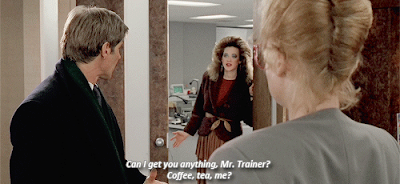
Coffee, Tea, Me?


"Working Girl" 1988
If I suggested that you stay away from coffee and other caffeinated beverages for 2 weeks, ideally 4 weeks, most people would say, "Oh, caffeine doesn't do anything to me," and they wouldn't want to do it. However, IF you experience any difficulties with sleeping, anxiety and nervousness, restlessness, acid reflux, stomachache, or lethargy and sleepiness during the day, this experiment is truly worth it for you.

If you are one of the lucky ones who experience absolutely zero problems with caffeine and can simply enjoy the joy of coffee, that's fantastic! I wish I were like that too. It's tasty, and the aroma is nice. Having some time at a nice café is just lovely. Unfortunately, in many cases, caffeine masks your exhaustion, and it compromises your proper self-care: You miss appropriate resting, which causes even more exhaustion. By the way, energy drinks can be even worse! They should only be consumed like medicine, if ever, when you have an absolute deadline or need to drive to a hospital to visit someone in critical condition at night or any other absolute situation.

There seems to be a gap between the surface-level benefits and/or impact you get from coffee and its hidden negative impact under the surface, as I listed above. Because people don't feel much of the immediate effects, such as feeling energized or staying up late with coffee, they automatically believe coffee has no significant impact on them. But that's just not true. Therefore, this experiment is very important to find out if there is any unknown problematic impact on you or not. I know the thought of having mornings without coffee is scary for you, but I still strongly recommend it (or decaf options!).

A good number of people would be surprised at how much better they sleep, how less anxious they are, and how "Wow, the acid is gone!" Just to confirm that caffeine is not secretly affecting you, let's experiment! And if it does have an influence, you can still enjoy it occasionally, and the other times appreciate decaffeinated coffee and caffeine-free teas!

Coffee, tea, me? Always remember, "Me" comes first. Your health, well-being, and peaceful life are much more important than pleasurable drinks.


Monday, July 10, 2023

4 Helpful Tips to Incorporate Deep Breathing Exercises in Your Daily Experience More Easily

Today, I'd like to give you some helpful tips to help you incorporate deep breathing exercises more easily and smoothly into your daily routine. As I mentioned in my previous post, deep breathing is incredibly beneficial in many ways, and the best part is that it's free! Oh, and did I mention there are no side effects? There's absolutely no reason not to do it, yet most people don't do it enough. So, today, I'd like to share some helpful tips to make it easier for you.

Tip #1: Gently push your abdomen: Many people struggle with using their abdomens when practicing deep breathing initially. Instead, they tend to rely on chest breathing, which can feel uncomfortable and less rewarding even when done slowly. To overcome this, it's important to engage your abdomen. If you find it challenging, imagine there's a balloon inside your abdomen, place your hand on it, and gently push it in as you breathe out. Then, as you breathe in, visualize the balloon expanding and pushing your hand away. This technique allows you to utilize your diaphragm more effectively.

Tip #2: Close the back of your throat to slow down your breath: To slow down your breathing effectively, try exhaling as if you were fogging a mirror, but through your nose. By exhaling slowly and utilizing your abdomen (as in Tip #1), you can significantly slow down the pace of your breath. If this technique proves difficult, you can purse your lips as if you were whistling and exhale slowly, then inhale through your nose slowly.

Tip #3: Keep your tongue touching your upper palate: Breathing through the nose can be challenging for some individuals. It may feel impossible to remember to breathe through your nose consistently, as breathing is often an automatic process. To make it easier, just pay attention to the position of your tongue and keep it touching your upper palate. This simple action makes it more natural and automatic for you to breathe through your nose. Breathing through the nose has many benefits, which is what “Mewing” is all about, so why not give it a try? Once your muscles remember the correct tongue placement, it becomes much easier to maintain, resulting in improved breathing.

Tip #4: Focus on squeezing out your breath to exhale: When you experience sudden upsets, anger, shock, nervousness, or similar emotions, taking a deep breath can be very helpful. However, it's not easy to implement when you're highly upset. In such situations, try focusing on exhaling slowly by squeezing out your breath forcefully but slowly, using the technique described in Tip #2. By squeezing it out this way, it becomes an active behavior that's much easier to perform than trying to calm yourself down directly. You can even do it while feeling angry or enraged. When you exhale slowly this way, your body automatically adjusts by inhaling more slowly as well, leading to the amazing benefits of deep breathing.

In summary, I strongly recommend you incorporate any of the above tips or any other techniques you come across to enhance your deep breathing practice in your daily life. You'll experience a greater sense of peace, improved relationships, and a more relaxed life. 


Monday, July 3, 2023

Overrated “Motivation”

“Motivation,” I think, is a perfect topic to talk about today, as I have not written anything here for several years! Yes, it was my bad. I was not motivated and was so lazy.

Many people rely on motivation to explain what they do and don't do. Phrases like “I need motivation to do...,” “I did not do it because I was not motivated,” and “If I had more motivation, I'd do...” are very familiar, aren't they? We tend to value “motivation” as the driving force behind our actions.

Of course, I would not deny that. With strong motivation, we become more effective and efficient in doing what we are supposed to do. We feel more excited about it and get it done more quickly. However, if we rely too heavily on our motivation, it won't always be helpful. We are not powerless creatures controlled by motivation. 

What is truly important is to shift our mindset and view motivation as an optional boost: We expect ourselves to take action regardless of our level of motivation. We can appreciate good motivation if we have it, but we shouldn't depend on it entirely. We can still accomplish tasks as if motivation is not a necessary factor. By adopting this framework, we can free ourselves from the burden of motivation and simply appreciate it if and when it arises.

The bottom line today is that we may want to avoid overrating and depending too much on our motivation. If we let go of the expectation, all we have is the appreciation of motivation when we experience it, rather than treating it as a requirement we constantly wait for or seek. Just take action, and the sense of accomplishment will bring you satisfaction and possibly even fuel future motivation. Today, I pushed myself to write and upload this article, and I feel good now.


Monday, August 17, 2020

The Power of Acceptance of Reality

So many people appear to overlook the power of acceptance. It is not a passive thing, but an active action. Please let me explain it a little today. 

One of the important acceptances is of your emotional experience. I have written about it before, and I will do it again and again in future, too; your emotional experience needs to be accepted no matter what emotions you are experiencing (*except for “mislabeled guilt”). You have no choice but to do it in order to avoid emotional, behavioral, and/or relational problems later on. It feels counter-intuitive, but it is in fact the case. Accepting your emotional experience is closely related to accepting yourself; therefore, if it is denied, you are denied. 

Another important kind of acceptance is today’s topic: Acceptance of reality. It may sound strange, but many people refuse to accept reality. I understand that reality often hurts (very much) and we don’t want things to be the way they are. However, while you keep denying reality, your life won’t get better and become fulfilling unfortunately. 

The reality I am talking about here are things such “My mother has never been mother-material who can love me unconditionally,” “My boyfriend would never love me in the way I hoped he would,” “I cannot look like the cover model of magazines,” “Covid-19 may kill us,” “I am actually an adict, ”and so on. Can you see it? They are unfortunate realities that people want to dismiss.  

Because of our own desire, we prefer to cling to our “fantasy” rather than face reality. Yes, I understand that reality bites and that you are afraid that you may end up becoming hopeless and powerless if you accept it. However, this is the big misconception. 

When you decide to accept reality, which is a brave action, it may hurt at first, but then you can eventually find some way to live with it. It may be counter-intuitive, but when you finally face and accept reality, you accept your lack of control and powerlessness, which you had been afraid of. But then, something very important can happen to you. You can now see the realm of your control, and you can focus on and maximize it in order to improve your quality of life. 

In other words, when you are in denial of reality, you just feel frustrated and keep making a hopeless effort to fail and repeat it. When we accept reality, you can see what you can do and what you cannot do, and you can pay attention to what you can do, in order to make the situation better within the limitation (reality). This is how you want to live your own life, because it will give you more power and joy! 

Acceptance is not to give up. Please remember it. 


Saturday, April 4, 2020

How to live in the time of COVID-19? Let’s not lose sight of basic principles


The current Covid-19 situation has been affecting almost everyone on the planet. Many many people are unsure how to react and behave, all the while experiencing strong emotional reactions such as anxiety, fear, and anger. It’s a new experience and requires adjustment to our perspectives on life. Because there are many tips on how to spend our days during stay-at-home orders, I am not writing to repeat those things here. Today, however, I would like to share some philosophical point of view that may be helpful for some of you. Because it is a philosophical perspective, you may disagree, and that’s totally fine. I am not talking about what should be an absolute truth or what you have to do, but to offer you some thoughts on  what may help for you to remain calm and accepting of the current situation we all find ourselves in.

In a unique wayCovid-19 has forced us all to face our death and powerlessness, which, of course unsettles and unnerves us all. At the same time, if we step back and see the bigger picture, it has always been this way: We are all moving toward our deaths which inevitably awaits us at some point in the future; maybe tomorrow, maybe in 50 years, we just don’t know the time or place, but it’s an inevitable appointment we all have to keep. The fact hasn’t changed that we don’t know when we will die, but that we will die is certain. The virus has so suddenly and vividly brought this fearful truth to our current consciousness that it has unnerved us both individually and as a society, and we are all confused and panicked. Therefore, I’d like to suggest we go back to the very basics of life in order not to lose our personal foundations for peaceful and calm existence.

When it comes to our life, I think there are three important principles to consider:

We 1) try to survive as best we can until our turn comes to die, 2) while maximizing our quality of life as much as possible, 3) in a state of fundamental acceptance of our limitations

The first one needs no explanation. We will die but until it happens, we try to stay alive. That’s a basic drive for most people.

Now let’s think about the second one. We are hoping to have a “good” life, and in order to have it, we do different things: For some people money matters; for some it’s hobbies; for others it’s family and friends, and so on. As much as possible we want to have a good time rich with experience until we die. There is no absolute right or wrong about it; we all just want something to fulfill our life. 

The biggest challenge is the third one… Essentially, we have no choice but to accept things that are out of our control. Limits are limits, and we just accept there is nothing we can do about them. When we try to deny them, fight them, or try to do something to change things that will always be out of our control, we will end up with frustration, pain, hurt, anger, sadness, and so on. In order to avoid this, it is crucial that we just accept our powerlessness, which eventually gives us some peace of mind.

Let’s apply these principles to our current Covid-19 situation. We try to live as well as possible in this tough time, and we maximize our quality of life (and reduce boredom) as much as we can, by doing a variety of things at home. At the same time, we need to choose to accept our powerlessness about the pandemic and the urge to manage it beyond our control. If you don’t do so, many emotional issues will arise. All we can do is to continuously maintain physical distance, stay at home, wash our hands, wear masks, and so on, all of which are things in our control. We continue to do it to live and maximize the quality of life. And we just accept the fact that that’s all we can do. The rest is out of our hands. We don’t struggle over things we cannot do anything about. Just let it be and have faith or hope that eventually this time too shall pass.

In the bigger picture, it has actually always been the same thing in life. We will live and one day we will die, and death is out of our control. We just accept the fact that we will all die. At the same time, how we care for ourselves is something that is in our hands and can actually delay our inevitable rendezvous with death. A healthy diet, exercise, good sleep, medical checkups, saving up money for our financial peace and physical well-being, maintaining good relationships, and so on… It’s essentially the same thing, either with Covid-19 or not: we care for our safety and health as much as we can, and the rest is up to God, the Universe, Lady Luck, Fate, or whatever you believe, isn’t it? The current situation is just something with more limitations. If you were already doing your best to achieve a long and healthy life, you can just continue doing the same thing within the extra limits currently imposed on us. If you haven’t been doing that to date, then now is a good opportunity to face your death and change your lifestyle in a way that improves your odds of a longer and healthier life. The benefits will be immediate and last until that day you die, which will hopefully be a long time from now.

Many people tend to cling to their fantasies about how things should be, be it with the virus, the government, society, other people, etc. and end up feeling defeated, angry, and frustrated. Many people tend to have catastrophic thoughts about the future, and end up feeling depressed, scared, and panicked. None of this is helpful, because it is all out of our control, and focusing on things that we have no power over does nothing but harm.

We benefit from clarifying which things are out of our control and which things are in our hands. No matter how we “feel” about it, we have no option but to accept our limitations; in fact we have no other option. We can let go of useless efforts to control everything, choosing instead to just stay focused on what we really can do. Strangely, when we fully accept our powerlessness, we are more empowered and able to maximize what power we do have over things under our control, resulting in enhancing the quality of our life. 

We are currently in an extreme situation, but the fundamental principles have always been the same. Let’s focus on what we can do and let go of the rest in order to enjoy a more peaceful state of mind to experience the joy of life. 


Thursday, February 13, 2020

The Keynote Speaker: Self-Care and Stress Management


Last week, I wrote that I was invited to give a workshop at the Victim Advocacy Institute Conference. Coincidentally, I was also invited to be the Keynote Speaker for the Waymakers’ annual All-Staff Training Day yesterday. Because I like them, I was honored to be there to talk with over 100 staff members about Self-Care and Stress Management. Yes, it is an important topic and I care about it a lot. I hope I can post some articles about it here in future.

Anyhow, the audience was great. They responded to my jokes and silly comments and laughed a lot! Getting people to laugh is already a big achievement (particularly for a serious and boring Asian male, right?) and they were attentive with good participation. I thank them for that a lot!

That's the podium! 
Also, it was my very fist time to step inside a Dave and Buster’s. I had no clue that Dave and Buster’s has rooms for conferences and events. Did you?? It was interesting that I made speech at Dave and Buster’s.

Wednesday, November 13, 2019

Frustration and Expectation

Do you feel frustration a lot? If you experience it occasionally, that’s normal and fine, but if you feel it quite frequently, that’s not so healthy. I will talk about the emotion of frustration today.

We feel our basic emotions, such as anger, sadness, joy, and fear, naturally from birth, but frustration is more complicated: When we have some “expectation” of something and this expectation is not met, we get disappointed and experience “frustration.” Without such expectation, we would not have frustration, even if other emotions may be experienced.

We tend to have a lot of expectations of ourselves, our spouse, family, company, others, society, and so on. And the more expectations, the more disappointment and frustration we end up having. What is most important in this picture is to look into our expectations themselves, instead of experiencing frustration and/or frustrating situations.

Our “normal” is not really normal for everyone. It varies between individuals, cultures, and generations. What we think how things should be is not an absolute common belief. Others and society actually rarely satisfy our desires. The important thing is to understand and admit what are reasonable expectations “at this point,” “realistically speaking.”

As a result, there is some sense of “acceptance.” Based on this acceptance of reality, we can make a decision of what to do and how to do. For example, either to promote improvement, give up, avoid, etc.

What’s essential here is to recognize what is under our control, and what is out of our control. If we try to do something beyond our locus of control, the worries and expectation will be unresolved with an outcome of disappointment and exhaustion. Sticking to the realm under our control and doing what we can do is most important.

Excessive and unrealistic expectation is nothing but harmful. It is helpful to reexamine your expectations for yourself, others, and the world.

Thursday, October 17, 2019

A Inspirational Short Story to Share

I was taking a yoga class and the teacher shared a very short story which struck me. I wanted to share it with you today.


There is a story they tell of two dogs.

Both at separate times
walk into the same room.
One comes out wagging his tail
while the other comes out growling.

A woman watching this
goes into the room to see
what could possibly make one dog so happy
and the other so mad.

To her surprise
she finds a room filled with mirrors.

The happy dog found
a thousand happy dogs looking back at him
while the angry dog
saw only angry dogs growling back at him.

What you see in the world around you
is a reflection of who you are.


How do you like this story?

Although not always the case, this is often how we behave. We psychologists call it “projection” where we project our unwanted feelings onto others, and react to them, without knowing the feelings are coming from us. If we are open to our own emotional experience, accepting them without any self-judgment, we can be ourselves, and let those around be themselves too.

*I was unable to find the author of this story, although I spent some time trying to research it, so I could not add a reference to it. If anyone happens to know exactly where it is from, please let me know and I will add the information.

Tuesday, October 8, 2019

Decision Making in Crisis

I took a workshop last weekend about legal and ethical issues, something which psychologists are required to do every two years. For some reason I love to learn about legal and ethical problems and the workshop was quite enjoyable, even if the room was freezing and my back was hurting a lot!

One of the remarkable things based on a various research that was addressed at the workshop was how our emotional state can influence our decision making and behaviors when we are in trouble. Putting it simply according to my understanding, when we are experiencing fight or flight mode, our anger or anxiety/fear can impact our actions more than we realize. Therefore, a major recommendation was to slow down. When we are threatened and in crisis, we need to slow down by consulting with others, relaxing, breathing deeply, and the like, so that we don’t screw things up. Yes, that’s understandable.

At the same time, interestingly, the importance of our emotions in the decision-making process was also emphasized. This means that if we ignore, disregard, or detach our emotional state, our decisions won’t be the best, either. This can be counter-intuitive for some “logical” people, but it has been found to be so, and I have seen it as well.

What is cool about these two important findings is that it aligns with what I have been believing and advocating for: I have been encouraging people to acknowledge, accept, and as needed express their emotions, instead of avoiding and ignoring them. In a crisis situation, for example, we may feel angry and/or fearful. If we can acknowledge those feelings and accept them, that itself would slow down our reactivity. Also if we express our emotions, we can consult with someone or undertake some more introspection. When we do that, we are no longer just emotional beings; we are now aware that we are experiencing our emotions. These two states are quite different.

The bottom line is that in catastrophic situations, we may want to acknowledge, accept, and as needed, express our emotions, so that we can slow down our reactive process, while remaining in touch with our emotions. This way we can make the best decision and take action. It sounds quite reasonable and helpful to me. How about you? 

Thursday, September 19, 2019

So many “Shoulds” and “Shouldn’ts!”

Are you aware of using the word “should” frequently through the day? Do you also notice people around you also using this word many times? If you can answer “No” to these questions, you are lucky and you can stop reading now! For the rest, quite possibly a majority of you, I’d like you to know that overusing the word, “should,” has a negative impact on you and others, as I will explain today.

First, please know that this use of “should” that I am writing about includes “have to,” “must,” and “ought to” as well. Therefore, please don’t feel relieved if you often use “have to” instead of “should.” You will still benefit from this post. All of these have similar impact on us.

Of course, I would not deny there are things we “should” and “shouldn’t” do, such as taking care of our children, following basic rules, not violating others’ rights, breaking promises, not killing people, and so on. Yes, I am aware of that. However, do you realize that we do not have as many things we really “should” or “shouldn’t” do as might be indicated by our frequent use of should? It’s actually much less!

Why do you think I am against the heavy usage of “should” and “shouldn’t?” That’s because “should” gives us a sense of obligation, and if we don’t do what we “should” do, then we end up feeling bad and guilty. If you keep using this term on yourself a lot, you will be feeling bound, suffocated, and overwhelmed in your life, because you have little sense of freedom left, but rather a feeling of so much obligation which may not be really necessary. Also, if you allow someone to use this term with respect to you a lot, you will lose your sense of autonomy and power, and you will be emotionally submissive to the person and the “should” statements. You may even rebel and fight back unnecessarily instead. “Should” and “shouldn’t” pressure us in a certain direction, but we often don’t notice its subtle impact on us; this is the big risk and problem. 

In reality, so many things we do in our life are actually optional. Even eating three times a day or helping out someone who just fell on the ground is up to you. Lots of people say, “You should take care of your elderly parents,” but even this is a choice you can make, not an obligation. (By the way, I am aware of a lot of cultural and racial norms around this particular example, but still, it is not an automatic obligation). There are things good to do and not good to do, but it is still optional and you can choose if you want to do them or not.

As another example, you might be in the habit of saying, “We should have lunch with so-and-so next weekend.” Try to start saying something like, “Let’s have lunch…” or “I’d like to have lunch…” Using these alternatives psychologically changes your thinking from obligation to something you choose and want to do. If you avoid using “should” and “shouldn’t,” you can feel more aware of your own options being your own choices. Because it is optional, you can pick and choose what are optimal for you and your loved ones, and what are not. As a result, you can simply your life and use your own energy and resources more effectively with a better mood.

You may be afraid of what will happen if you stop using “should” when it’s really about something that is an option,  but you will actually be surprised how much freer you feel once you rid yourself of this term. And now you can choose to do what you choose to do for yourself and your loved ones. This shift makes your life more fruitful and fulfilling. 

Monday, June 10, 2019

Why Not Breathe More Slowly and Deeply??

One of the easiest and simplest ways to reduce your experience of anxiety and stress is deeper and slower breathing. You have heard about it many times, haven’t you? If you are suffering from anxiety, obsessive thoughts, stress, pressure, worries, etc., it is really helpful to incorporate deep and slow breathing in your life. However, many people don’t do that but still complain about their emotional problems. This breathing is free, effective, and with no side effects… Why not?? Today, I won’t talk about the importance of deep breathing (because many people have done it already everywhere!), but share my thoughts on why people don’t.

Stubbornness?: I think one of the biggest reasons is we are just so stubborn and inflexible. We like and follow our routine, and it is just so difficult to change the routine, including our way of breathing. It does not matter if we are benefitting from our routine or not. We just continue it. When I do life-coaching, this is one of the biggest obstacles I have to deal with, and I have to use a variety of behavior-modification strategies to make a change. We can read what’s good for us and what works for our life from many personal development books and websites, and if we all follow some good ideas and advice, people are much happier and healthier by now, right? That’s not how we normally are. Therefore, we first need to understand our fundamental difficulties with changing our routine, and learn how to manipulate ourselves to incorporate something new.

Not Magical Enough?: Also, probably breathing appears too dull and simple to be something to get excited about. Like a variety of diet plans and exercise machines people are fascinated about and fail at repeatedly, we just want something that look special, sexy, and magical. Something that is strangely and magically easy and effective to make everything so great! Breathing sounds so boring and too simple, like eating healthy and exercising more. Therefore, it does not appeal so much.

Don’t Know How?: In addition, I have to say many people don’t really know how to deep breathe effectively. I teach my clients how to deep breathe effectively, and most of them use their chest, instead of their diaphragm. As a result, it is not only less effective but also uncomfortable. Obviously, if it does not feel good or work effectively, people don’t want to continue it.

Lack of Self-Monitoring?: Self-monitoring is another interesting factor. When my co-author and I did research in Japan about deep breathing and self-monitoring in different populations, we were surprised how many people cannot even monitor their emotional experience and condition, as well as their environmental factors. Such a big lack of awareness was one of the common issues we observed. If you don’t pay attention to your own experience, you cannot even notice how your breathing is affecting you and your life. Therefore, people don’t do it, because they don’t notice the difference!

I have shared some reasons why I think people don’t take advantage of deep breathing. I don’t blame people for not utilizing deep and slow breathing, because it is not as easy as it sounds as I mentioned above. At the same time, if you slow down and deepen your breathing as part of your regular breathing, or for just 10 minutes a day (or even just a few breaths!), you can notice a remarkable difference. I personally want to do something that is simple, free, effective, and has no side effects for myself. What about you?

Monday, June 3, 2019

Let go of Shame-Full-Ness

Last time I discussed important issues related to abusing and misusing the feeling of “guilty.” When guilt is mentioned, another important emotional experience needs to be addressed as well: SHAME!

In some study, guilt was considered to be experienced more among Western societies, whereas shame was experienced more in Japan. This is said to be because of the absence of belief in one God, insularism, and an emphasis on the public eye in Japan. There may be some differences in degree, but I do often see both of these painful emotions in the US and Japan. You don’t believe that Westerners don’t feel shame much, would you? Right; I didn’t think so.

When it comes to shame, the feeling comes from imagining the judgement of others, of being under the eye of others. It is not about the laws or right and wrong as is the case with guilt, but rather with how others see you or what you did, that is the fundamental basis for the feeling of shame. We are shy, we are afraid of judgment, and we want to look good... Therefore, it is totally understandable that we worry about others’ watchful eye causing feelings of shame. However, many feelings of shame that people experience appear to be so unnecessary.

There are actually not so many things about which you can really can truly make yourself feel shame about. Well, if you killed puppies for fun or slept with your spouse’s best friend on your wedding day, you can definitely feel ashamed, and I would agree with it. It is a normal feeling of shame and nothing is wrong with it. But I don’t think most of you who are reading it really do such things in general, do you? Then why do you still end up feeling shame?

One possible and simple reason is that you still allow yourself to be surrounded by unreasonably critical, abusive, insecure, or judgmental people. These people cause feelings of shame in others, because that serves them well by hurting others. Or it’s a matter of them projecting their emotional issues onto others in a form of shaming. They need you to feel shame, and they make sure it happens to you intentionally or unintentionally (either way is irrelevant).

If you say you are NOT surrounded by these kinds of people, but you still experience a lot of shame, then it may be a less simple matter. Another possible reason is you have internalized those who shamed you in the past, which can be your parents, grandparents, teachers, preachers, ex-friends, etc. Something might have happened to you once or many times when you are younger, and you internalized this experience and overgeneralized it. We may not remember what happened, and it could be just because you dropped a glass of milk by an accident or some such small thing. Still, if it was internalized as a shameful event because somebody at that time made you feel so, and then this installed emotional experience is repeated again and again, and now you don’t even remember how it even started.

Then what can we do? In a way, it is simple, although probably a very scary challenge. You do not need to keep such shaming people in your life! If you have such people in your life currently, let them go or drastically minimize your contact with them. Nothing can justify your keeping these people in your life. It is okay not to have people with venom in your life.  If it is because of internalized experience, and you don’t have the people at the root of these feelings of shame in your life any longer, it is still important for you to let it go psychologically. A long time ago, someone at that time thought you were shameful or you did something shameful. So what? One, it was not true unless you killed puppies or something like that, and two, you are no longer such a powerless and scared child. You are now more mature and stronger. You can just let it go and live your life without shame. If you feel shameful a lot, your life is shame-full. Let go of these people. Being shameless means living without shaming people in your life!


Monday, April 29, 2019

Be careful of saying “I feel guilty.”

As you may know, I really value all of our emotional experiences. Even something that is very “negative,” embarrassing, and/or uncomfortable, when it comes to our emotional experience, has to be acknowledged, accepted, and expressed. There is no benefit gained from ignoring, pushing down, or distracting ourselves from these emotions, and not expressing them in some situations. However, when it comes to feelings of “guilt”, I warn you to be very careful and not to misuse this expression, because doing so can lead to unnecessary suffering on your part.

You can feel guilty only when you did “something tangibly wrong”, such as something illegal and/or immoral or bad. Other than those situations, you CANNNOT feel guilty. I know many people cannot help but feel guilty, even when they have done nothing wrong, but such painful feelings CANNOT be labeled as guilt. They are actually something else, probably relabeling of such things as feeling “bad,” “sad,” “helpless,” “anxious,” and such.

It is very very important not to misuse the word “guilt,” although it is just a word. Do you have any idea why that is? Because although it is just a word, it has strong power over our psychological elements.

Let me give you an example. Assume you have an alcoholic brother who has been asking you for money for years. You have helped him out many times, but the result has been the same, and he is still a drunk with no motivation. You finally decide to choose yourself and your family and/or family of choice over him and say “No” to him, but you feel “guilty.” In this scenario, did you do anything wrong,  something illegal or immoral? No, you did not. So, it is not “guilty” feelings, but you are really feeling “sad,” “helpless,” and “bad” about the situation and about him.

If you mislabel it as guilt, then you cannot help but feel you are doing something wrong, and you will end up experiencing some internal pressure to do something for him, no matter how much you know that he will not change or even appreciate it. If you don’t do anything with this guilt, you will now suffer so badly because of this “guilt,” because you feel you did not do anything for him. Pay attention: If you label your feelings as feeling sad, helpless, and bad about the situation and/or about him, you won’t need to struggle over the strong internal pressure you would have experienced otherwise with labeling your feelings as “guilt.” You still feel a lot of emotion, but then you may be able to accept your powerlessness over the situation more calmly in time. It is just a matter of words, but it has strong psychological power.

Many people misuse the word “guilt,” and suffer a lot unnecessarily as a result. Yes, it is still awful to witness someone we love or care for doing something that is not good for themselves and/or suffering from their own issues over which we are powerless. We feel bad. But it is not our wrongdoing and our feelings can’t be called “guilt.” This is very important and if you tend to feel guilty often, try to pay good attention to what you are doing, and if in fact it is not something that is wrong, then correct this misused expression. You will notice something is different in you as a result.

As the expression “guilt-trip” suggests, the word “guilt” itself has strong manipulative power to it. When we have done nothing that is actually bad or wrong, using accurate words other than guilt to label our feelings is really helpful in our lives.

Tuesday, March 26, 2019

The Fear of Being Weak

I often wonder when it was that thinking of yourself as weak became to be considered a bad thing. And why is it that when people think of asking for help, they think “I’m weak so I should not ask for help and just stay strong?” Why do people say “I should not cry because it is a sign of weakness?” Sooo many people hold this strange belief, and it’s not only men who often tend to be afraid of looking weak, but women too. Honestly, it’s REALLY a lot of people! This is a silly belief so let’s talk about it today.

First, is being weak a bad thing? What are you talking about?! We are human, not robots. We have times of being strong, and we have times of being weak. So what!? Unless you constantly have what people commonly call “nervous breakdowns” or take “mental health days” every week or so, you are just a normal human-being. Even if you maintain your condition really well physically, mentally, and spiritually, horrible things can and do happen, and we all suffer at times.

Second, is crying weak? Honestly speaking, if you cannot allow yourself to cry when you want or need to, that   is actually weaker, don’t you think? Why is that? Why is it that you cannot cry? Is it that you are so “afraid” of other’s judgment that you cannot let it out? Is it that you are concerned about how you look to others, or how others think of you? Is it that you are unsure if you could recover from “breaking down”? All of these are big signs of “weakness.” If you want to be really “strong,” you need to respect and accept your emotional experience, even painful and uncomfortable ones, while having faith in yourself and others around you, don’t you think? 

Third, is asking for help weak? Gosh, this is such a common misunderstanding I see in the US. So many people have a big issue with asking for help. And as a result, you may not be able to complete your task, you cannot get things done appropriately, or you have a “nervous breakdown.” This is not a sign of your strength. Really strong people know that they can trust people who are willing to support them, while objectively and accurately assessing what help and support they can utilize for a better outcome. That is a real strength, isn’t it? Again, if you are afraid of others’ judgment about your asking someone for assistance, no, you are not proving your strength.

This “fear of being weak” is so common and so misconstrued. Please think about yourself and if you happen to blindly believe this misconception, this is the time to rewrite your script and become really “strong!”

Monday, March 18, 2019

Gifted… Cursed as well


For some reason, I have met a good number of gifted, smart, specially talented people both through my work and in my private life. They work not only in academia, but also in the professions, art, or some other particular areas. Being gifted sounds great, right? But their suffering is often overlooked. I am quite familiar with such experience, and have helped out people with smart brains and/or special talents, and believe that such gifts can be a curse. Gifted people may need more support than people usually think.

“Normal” means “belonging to the majority.” Below and above the majority is called “abnormal” by definition. This is not necessarily a good or a bad thing, but just a matter of the numbers. Since being gifted is actually considered “abnormal,” gifted people can experience some challenges in their lives.

Why is that? Consider the challenges endured by left-handed people, for example. The world we live in is designed for right-handed people overall. Therefore, if you are left-handed, scissors, doors, switches, etc., so many things were not designed for them, and their difficulties are often overlooked or simply ignored.

When it comes to gifted/smarter people, their “normal” is not the majority’s normal. What they see/experience is not what the majority sees or experiences. Often those with gifts see things more quickly, more deeply, and with a different perspective. As a result, they often experience misunderstanding, isolation, rejection, and difficulty connecting with others.  Some even self-sabotage to fit in with others. It is just not easy for them to perform to their full potential because their perspectives are not within the range of normal.

This is very tragic for those born with some special abilities. Their gifts may work as a curse, causing them suffering. When I meet such people through work, my focus is to help them understand who they are and what they have, and why some areas of their lives have been so difficult, while helping them learn how they can still fully perform to their full potential. They can still live to their full potential while being connected with others. This is liberating, freeing, and a big relief for them to discover.

My message to you today is that if you are gifted, or if you know someone who is gifted, please make sure you understand this challenging reality for you/them. And as needed, please allow yourself or give them support, because it may change your/their life. 

Monday, May 14, 2018

ECU(A)!


Even though I have been learning and practicing psychology for over 20 years, there continue to be opportunities to learn that present themselves to me. It often comes out through interactions, particularly with my students and clients. Today I experienced one of those opportunities that I would like to share with you

Today I saw a lovely couple and they are good people. Both of them are loving and care for each other, but like all couples, they experience conflicts from time to time. Why is that? Well, while exploring and understanding the patterns, I came up with a helpful formula that most (fundamentally healthy) couples can utilize. This couple named it “ECU.”

E: First, as a couple, you want to “Express” your desires, needs, and wants to your partner directly. Many couples don’t express it directly, as a result, they  end up feeling disappointed, sad, angry, and so on. Yes, it is sometimes challenging to express your needs and wants out of fear of rejection, your desire for your partner’s spontaneous behavior, or because you just are not used to expressing your needs and wants. However, a lot of issues are preventable only if you express what you want to your partner in a straight forward manner. If both of you and your partner are decent individuals who are caring for each other, you need to express your wants and needs to your partner, so as to give your loving partner the opportunity to give you what you are looking for.

C: If you fail the first step of “Expression,” what tends to happen is that you experience some negative emotions. The negative feelings arising out of your feelings of not having your needs and wants fulfilled may lead you to distancing, avoiding, and/or shutting down from your partner. It may even create some fights and conflicts. Now we are stepping into discord. This is the time we need to get “Close.” Instead of pushing toward or pulling away, you get closer. You may have this second chance to express your wants and needs. You may be able to express your needs or wants while cuddling. You don’t go away or fight, but come closer. No matter how you are feeling or what you tend to do, just go forward to be closer.

U: Okay, we are not perfect and shit happens, therefore, you may fail to express what you what or get closer to your partner. You missed the first and second phase… Now it gets ugly. Both of you become frustrated, distant, angry, combative, cold, and so on. But because you are a healthy enough couple, you decide to talk. However, unfortunately at this point, your talk often results in further disappointment, because what we often do at this point is to try to express ourselves to our partner with the intention of being understood. For example, we try to explain what we meant to do, or explain how hurt we are feeling, or what we wanted our partner to do, etc. Too late. Once both sides are emotionally worked up, it won’t be received well. Then we try to explain ourselves even more, and end up feeling totally misunderstood, dismissed, and miserable.

Then what can you do? In this final stage, the focus needs to be “Understanding” your partner. At this point, you don’t try to express yourself. You just try to understand your partner’s experience as much as you can. How such loving couples end up in such a situation of conflict can be surprising, but starting out with your fundamental belief that your partner is a decent and loving person, you just try to figure it out. Therefore, you just want to understand what your partner’s experience was from the beginning. You do not impose your experience or feelings to justify your standpoint, but just try to fully understand your partner’s experience as if you are in your partner’s shoes.

If you do it well, you cannot help but ending up saying to your partner, “Ah, that was your experience then,” “I see, no wonder you said (or behaved) that way,” “Now I understand how and why you felt [angry/sad/frustrated/hurt…] at that time,” and so on. This will give you more clarity, empathetic understanding, and calmness. Also, this will help your partner feel understood and relaxed. Then your partner is now willing to understand you in return. As a result, you both will feel much better, understood, and ready to resume being a loving couple!

Doesn’t this make sense to you? In summary, first, do not hesitate to express your desire to your partner; doing so will help you avoid in the first place many situations ending up in conflict and hurt. However, if you or your partner neglect to express your needs or wants and start feeling negative, come closer to your partner. If you still fail at this point, then both of you now will have become quite negative and combative, and must just try to understand your partner’s experience and feelings selflessly. If you are both loving and emotionally mature, you will be able to resolve your conflict and move on and actually be closer and more loving for the experience. Once we can understand this dynamic, we can all avoid useless and meaningless fights in the future by “Starting at E”!

Well there’s one last letter in parenthesis: (A). Even if you utilize this formula and follow it well, you may still have some remaining discomfort, which can be impossible to fully resolve. Then what can you do? The answer is “Act.” This is your last chance to channel your inner actor/actress, and just behave as lovingly and sweetly to your partner. It may not be genuine, but who cares when it will resolve minor conflict in your relationship!?!? When you act this way, your partner will appreciate it, and become sweet and loving in return, and you will end up forgetting any small resentments. Because you and your partner are different human beings from different backgrounds, it is sometimes impossible to fully understand and accept each other perfectly. Then instead of focusing on small things, just act and appreciate what you can have as a result. It really works and will be one of the greatest relationship skills you will ever learn and have at your disposal to ensure a loving and life-long relationship.

By the way, why do you think this “A” is in parenthesis? Because “A” can be utilized at any time. Each phase could be challenging to some extent for anyone, particularly the later you leave it, the harder it gets. But no matter how you are “feeling,” it is an essential relationship skill and you “act” to make it work. I like to call it “channeling your inner actor/actress.” For example, even if you don’t feel like getting closer because of your “hurt” feelings, “just do it” like any good actor or actress would do. The first priority is your happy relationship and once it works, the relationship gets better, and you will feel better. SO WHY NOT??

Thursday, January 18, 2018

New Year’s Resolution – Behavioral Modification Strategies


So we are already well into the New Year now. Many people try to have New Year’s resolutions, but somehow they fall apart eventually (or already?). Have you had this experience? Why do you think it is so? Well, changing familiar behavior that are part of our daily routines is actually very, very difficult for most people.
Today, I am going share some wisdom Psychology has given us to help us achieve better behavioral modification.
By the way, I had an interview with the Coast Magazine some years ago about this topic, if you would also like to read that. Becoming the Best Version of You 

[Exciting Direction] First of all, you need to set a goal as something exciting, instead of depressing or punitive. Very typical resolutions/goals are, for example, “Lose Weight,” “Quit smoking,” “Get Out of Debt,” and so on…  Aren’t these already depressing and unmotivating goals? While the aims are good, expression of the goals are not fun.

When the goal is gloomy, we are less likely to keep at working towards achieving such goals because they seem painful. Therefore, it is important to imagine and visualize something really nice, still related to the direction, and have a better expression of the goal, such as “Be sexier and more gorgeous!” “Become smoke free so that I can run around with my child,” and “Feel financially peaceful.” The positive images are already making you feel a little more motivated toward that direction.

[Focus on the process] Secondly, the focus cannot be the results. It is very passive to stay focused on the result. For example, you lose weight as a result of some changes in your life. If your focus is the result, you will be more easily frustrated, helpless, and impatient, and you will eventually lose your enthusiasm more easily. Thus, the focus needs to be on the process, not the result. In this case, the focus may be “Exercise more.”

[Specific tasks] Rather than vague resolutions, the more specific and clearer they are, the better. If the wish is to “Lose weight,” then the direction is to “Be sexier and more gorgeous.” Your focus is to “Exercise more,” then the next step is to determine when, how, and what you are going to do to achieve your goal. For example, “Walking one hour every day.” If your tasks are unclear, you have more difficulty following through. Therefore, you will need to know what you decided to do.

[Schedule setting] Fourth, it is important to think of your daily routine, and where you want to insert your new habit. If “walking one hour every day” needs to be added to your daily life, you need to think of your everyday schedule and when the best time for that is. Just adding something new to our daily routine is very hard itself, so make it as easy as possible. The smoother things flow, the better.

[Easier transition] Fifth, it is helpful to make it easier. If you choose to walk in the morning, for example, you want to have all the clothes and shoes prepared by the bed, such that it becomes simpler and easier to make it happen. While half asleep, you won’t want to look for your walking clothes… You may rather go back to bed. Hence, it is helpful if the transition is easy. The more preparation, the better.

[Reward system] Sixth, having rewards keeps us going. Although we are much more complicated than mice or dogs, just like them, receiving rewards still really works. Simple rewards can be expressed as “If I do it for …, I will …” A reward can be something like going somewhere you like, buying something you wanted, and so on. That will keep you going. In addition, having something in your daily life is really helpful and sometimes just your daily routine may function as a reward. For example, what if you cannot touch your cellphone until you finish your walk? That may motivate you to finish your walk. If watching evening news is your relief after work, make it so that you cannot watch it until you finish walking. This kind of reward really helps. Just don’t make your reward anything that contradicts your goals. For example, if your goal is to “Look sexier and cuter” by not eating junk food, don’t make your reward a bag a potato chips! :)

[A little (potential) punishment] By setting up a “punishment” for failing in achieving your goals, you will add to your motivation. For example, let’s say you have someone in your life whom you think wastes money, you can promise them that you will give him/her a set amount of money when you don’t do your new task. For example, if you don’t walk as you promised, you give $10 to that person (*the amount depends on your finances. It needs to be something realistic and painful to lose). You don’t want to lose it for nothing! You will automatically be more motivated.

[Contract] Last, you can write a contract to yourself. You can write up everything above as a plan in support of your resolutions, and sign it for yourself. Now your goal is clearly set and it is more exciting and positive, your tasks are clearer, you know when and what to do, you have reward, and you seal the deal with yourself. If you ask someone close to be a witness, it becomes more accountable. That also helps a lot.

As you all know, changing our routines and bad habits is really, really challenging, and that is why these strategies above are important and helpful. In my life-coaching practice, I help my clients achieve their goals, while providing this kind of support and much more. It works. If you have any resolutions and you sincerely want to achieve them, give it a shot to utilize these strategies to make it come true! You will feel really better about yourself!

If you are interested in meeting with me to assist you with coaching you to achieving your goals in life, feel free to ask me questions to see if we can make it happen together.

Friday, December 22, 2017

Happy (?) Holidays


Time flies and it is already the end of 2017. Wow, already!? Gosh, 2020 will soon be here before we know it, let alone 2018!

So once again, the holiday season has arrived. As I wrote in the past about the holidays, (Holidays: Are they a Tough Time for You?), the holiday season can be a tough time for many people because of things like social isolation, personal loss that coincides with the holidays, unreasonable expectations of what’s expected at this time or year, or perhaps even seasonal affective disorder. Let’s try to have good awareness of our own personal condition at this time of the year and provide good self-care as needed.

Physically speaking, you may have extra activities and events, where you eat unusual things and in bigger portions, and consume more alcoholic drinks (or sodas). These in themselves can lead to inner conflict if you are at the same time trying to diet or eat healthier. Or you may become busier with shopping and work celebrations before you get to take some time off. Perhaps, even, you don’t have a job and feel the pressure of gift-giving when you don’t have the economic resources. Some of you may also be traveling or driving far to visit your family and friends at one of the busiest travel times of the year. So as you can see, it can be a time of year that is physically demanding, and loaded with expectations, which can be unreasonable.

Being busy by itself is stressful. Even if it is a fun time, parties and gatherings can be emotionally draining and exhausting. Whether you don’t have much to do over the holidays, or you have to work a lot to make it a success for family or friends, it can be hard not to compare yourself to others, as if everyone else is happy with their loved ones, but not you, leaving you feeling less-well-off and lonely. This is one of the worst times of the year for many people to feel lonely and unhappy.

Someone has asked me, “So then, what can we do if we are not feeling good?” As I wrote before, first, try to let go of the pressure to feel happy and/or have a great time with others. You may find all the pressure and expectations bothersome, annoying, time-consuming, and/or expensive. If that is the case, then just accept your feelings as they are. If you feel that way, don’t fight it. Fighting against these natural feelings is to give in to these expectations and will make you feel worse. Also feel ok to bitch about it as needed as much as you want to. Expressing yourself really helps to survive this time. Once you are okay with not forcing yourself to feel happy about the holidays or faking being happy about the holidays, then you can relax more. If you’re lucky, focus on appreciating what you have, while not comparing yourself with others unnecessarily. Being grateful for things, anything, is a great way to start feeling happier. 

If you are a more proactive-kind of person and you want to do something to recognize the holiday season to help yourself cope with your negative emotional experience, there is one thing that really works. You can do something good for others. For example, join some volunteering activities. You will be surprised how much you can do for others and how much people can appreciate you. We human beings experience happiness when we do something meaningful for others, and if you do, you will be feeling really better. For example, there are bound to be charities, churches, and foundations in your area that provide Christmas dinner for homeless or poor families, and they will be looking for volunteers to help out. 

If youfeel physically exhausted and/or your health is affected by your food and drink, be aware of your condition and take care of yourself better intentionally. Try and make the holiday season a time to take some breaks, eat better, slow down, and so on in order to treat yourself kindly. Your body is your vehicle to keep going in your life and if you don’t maintain it well, you will pay the price. Caring for yourself is one of the most valuable things you can do at this time of year. 

In short, again, it is really important to monitor your condition and take care of yourself. It is a myth that everyone is happy with no problems around the holidays. And it is okay to feel tired, stressed, and/or lonely. Let’s just be aware of our experience, and be kinder to ourselves!

Thursday, June 22, 2017

When we are desperately wanting something…

It is quite interesting and may sound somewhat superficial, but I think there is some truth to it, and I would like you all think about it today: When we are desperately wanting something, we really need to slow down and take stock.

This “want” can be about anything. It is often a strong desire to have someone, such as boyfriend or girlfriend, it can be some job or a promotion, or it can be more materialistic things, such as cars, toys, or collectible items. In any case, when we are really desperate for something, it seems like we often don’t get  what we desire for some reason. Either we end up with something less satisfactory, or we get so worked up, frustrated, and anxious that we lose our well-being.

I want to share something personal with you today. After losing the little tiny fury family member last year that I wrote about previously, there was a long period of bereavement for me. As I wrote my previous post, however, I allowed or almost forced myself not to run away from my emotional experience, and eventually, the pain was healed. Then what? Get ready for another fury family member!

Wow, I had no idea that rescuing a dog could be so stressful… Different facilities have different requirements and rules, and the requirement to actually be physically present for an adoption is not always possible because of work and distance. I finally found one I wanted to adopt, but then it didn’t work out… Then we tried for another…, etc. etc…. It really got to me. I became desperate, emotionally worked up, and frustrated and anxious. One day I realized something was NOT OKAY with me.

I got some invaluable support from a close and wise friend, and I realized that I needed to let it go. I let my control go and let the universe handle it, while maintaining a strong belief that it would eventually work out. It was such a huge relief! Even though I knew that such a state of desperation would not be helpful in general, nonetheless it sometimes creeps up on us in a sneaky way without us even noticing it at first.

Life is so interesting. I came to this realization in one brief morning after I asked my friend for help. In the evening on the same day, Mr. Max joined my family. What luck, what a weird scenario, how strange… Yes, I do understand that some people may say that this is just unscientific and superficial, but I think there is something in this that we can take seriously since so many people have had this kind of experience, don’t you think?

When we are desperately wanting something, we really need to slow down and stay calm. Let it be, and allow things to happen to come to you.